Benefits of Clean Room Partitioning
Superior Contamination Control
Clean room partitions create airtight, fully sealed enclosures that serve as a complete barrier against external contamination. Sealed joints, gasket-fitted doors, and integrated pass-throughs with automatic closers prevent particle infiltration, ensuring internal air quality meets specified classifications and particle count requirements.
Compliance with Regulatory Standards
Clean room partitions are designed to meet strict regulatory requirements including GMP (Good Manufacturing Practice), ISO classifications, FDA standards, and industry-specific cleanroom classifications. The sealed construction, material specifications, and system design ensure compliance with pharmaceutical, medical device, food processing, and semiconductor industry standards.
Enhanced Cleanliness and Hygiene
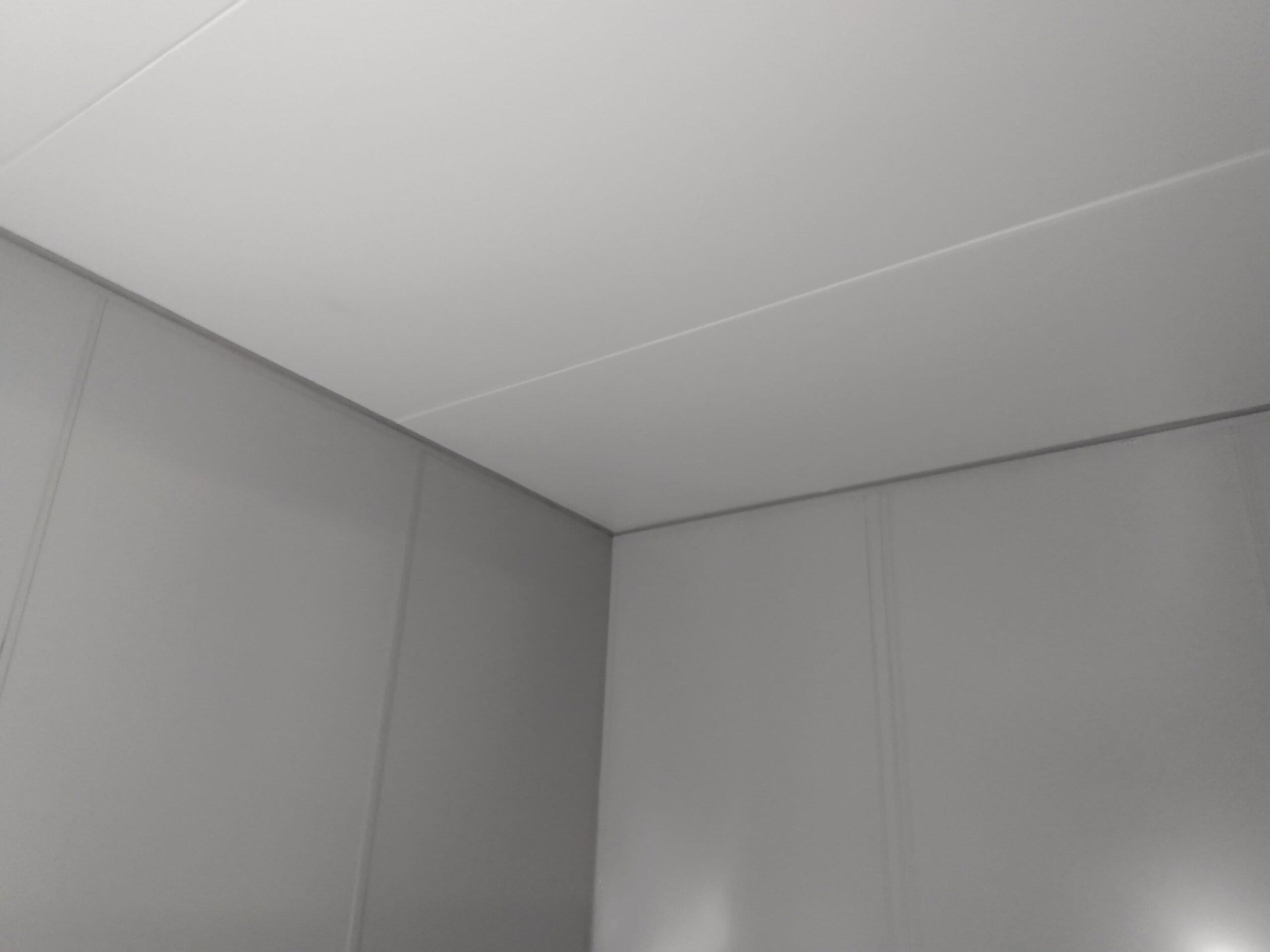
The smooth, non-porous surfaces and minimal seams of clean room partition systems prevent dust and particle accumulation compared to traditional construction. Non-shedding materials and flush joints eliminate harbourage areas where contaminants could hide, allowing efficient cleaning and maintenance while meeting rigorous hygiene requirements.
Cost-Effective Installation
Pre-fabricated modular clean room panels are significantly more cost-effective than traditional hardwall construction, requiring less material and labour. Installation occurs with minimal disruption to operations, and the systems qualify for accelerated depreciation schedules, providing substantial cost savings compared to conventional cleanroom builds.
Flexibility and Adaptability
Clean room partitions are fully demountable and reconfigurable, allowing layout changes, expansions, or relocations without major renovation work. As business needs evolve, the modular system adapts to accommodate new requirements without costly construction downtime.
Energy Efficiency
The airtight construction and integrated thermal properties of sealed double-skin panels reduce HVAC system workload, lowering energy consumption and operating costs. Tightly sealed systems prevent air leakage, meaning less energy is needed to maintain required temperature, humidity, and air quality conditions.
Integration with Environmental Control Systems
Steel partitioning for clean rooms is designed to work seamlessly with HEPA filtration, laminar airflow systems, differential pressure controls, and sophisticated HVAC infrastructure. The modular design accommodates ductwork pass-throughs, integrated ceiling systems, and air distribution, ensuring the entire environment performs as a unified controlled system.
Professional Aesthetic and Customisation
Available in multiple configurations including flush glazing, glass windows, various material finishes, and anti-static or antimicrobial coatings, clean room partitions offer professional appearance combined with specialist performance. Custom design ensures the clean room meets both functional and visual requirements.